
Introduction: Why Remote Sales Professionals Need a Better Remote Job Finder Strategy
You have probably felt the frustration. You spend hours scrolling through generic job boards, sending out application after application, and hearing nothing back.

Or worse, you get excited about a high paying sales role only to realize it is a scam. That scenario is way too common in 2026.
Here is the good news. The market for remote sales talent is booming right now. According to recent data, sales and business development roles showed the highest growth in remote job categories, with many positions paying over $100,000. In fact, fully remote job growth rose 4% in the first quarter of 2026 alone, and about 38% of professionals are actively looking or planning to look for a new role in the first half of the year. That means there are real opportunities out there.
But here is the catch. When everyone is looking for the same thing, the competition gets fierce. And with so many job boards flooding the internet, it is easy to waste time on platforms that rarely surface the kind of legitimate, commission based remote roles you actually want. Scams are rampant too, and a wrong move can cost you time and money.
This is where having a smart remote job finder strategy changes everything. You need more than just a search bar. You need tools and approaches that actually filter for high ticket sales positions, connect you with reputable companies, and help you stand out from the crowd.
This guide pulls together the most effective strategies and platforms for closers like you. We will cover how to find remote jobs hiring right now, how to work with specialized sales recruiting firms and sales staffing agencies, and how to avoid the traps that waste your energy. Whether you are new to high ticket sales or an experienced closer looking for your next big role, this roadmap will save you time and frustration.
If you are ready to stop guessing and start finding real opportunities, let us get into it.
Explore our complete library of guides to sharpen your skills and find the right path. Read Articles
Why Specialized Remote Job Finder Tools Matter for High-Ticket Sales
Here is the reality most job seekers miss. The best high-ticket sales roles rarely show up on massive job boards like Indeed or LinkedIn. Companies hiring for commission-based closers tend to post on niche platforms that attract only serious sales talent. If you rely on general aggregators, you are likely missing the opportunities that could actually pay you six figures.
Industry-specific job boards are simply better at this. A thorough comparison of 25+ job boards in 2026 showed that niche sites deliver higher quality matches than general boards ever could. Another analysis of niche job boards found that they capture stronger candidate quality because the people using them already understand the space. That is exactly what you want when you are searching for remote jobs hiring for high-ticket closers.
Specialized remote job finder tools let you filter by the things that really matter.

You can search specifically for commission structures, remote-first work cultures, and the exact industry you want to sell into. A general job board will not let you narrow down to "high commission, fully remote, SaaS closing role" in one click. But a focused platform will. That kind of precision saves you from sifting through hundreds of irrelevant posts.
Sales recruiting firms and sales staffing agencies also play a big role here. Many of them work directly with companies that need experienced closers. They pre-screen roles behind the scenes and match you with positions that fit your actual skills and income targets. Using them alongside a good remote job finder tool gives you a major advantage.
There is another big benefit. Dedicated tools cut down the time you waste on irrelevant or fraudulent listings. Scams are everywhere in the remote work world, especially for sales roles that promise huge paychecks. A quality remote job finder platform vets the companies it lists. You spend your energy applying to real roles instead of dodging traps.
If you are new to this space and want to understand what to look for, start with a guide that explains what a high-ticket closer does and how to begin your career. It will help you recognize the right fit when you see it.
Talk to our network about the tools and resources that can speed up your search. Get a Quote
Top 5 Remote Job Finder Platforms for High-Ticket Sales Roles in 2026
Now that you know why specialized tools matter, let us look at the best platforms actually delivering results in 2026.
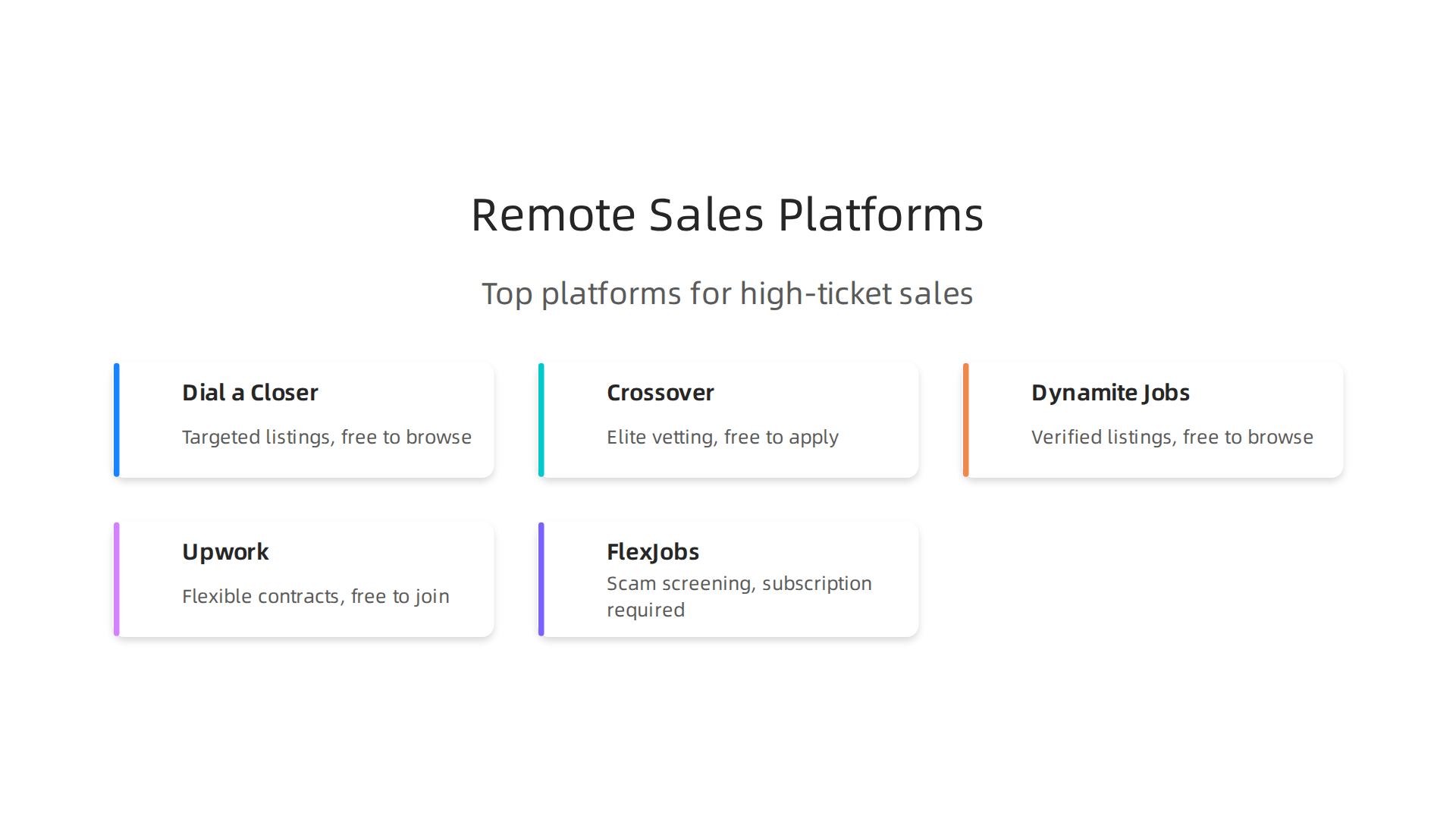
These remote job finder platforms each have strengths for different types of sales professionals. Here is how they stack up.
1. Dial a Closer
This platform is built specifically for high-ticket closers. It focuses entirely on premium remote sales roles.
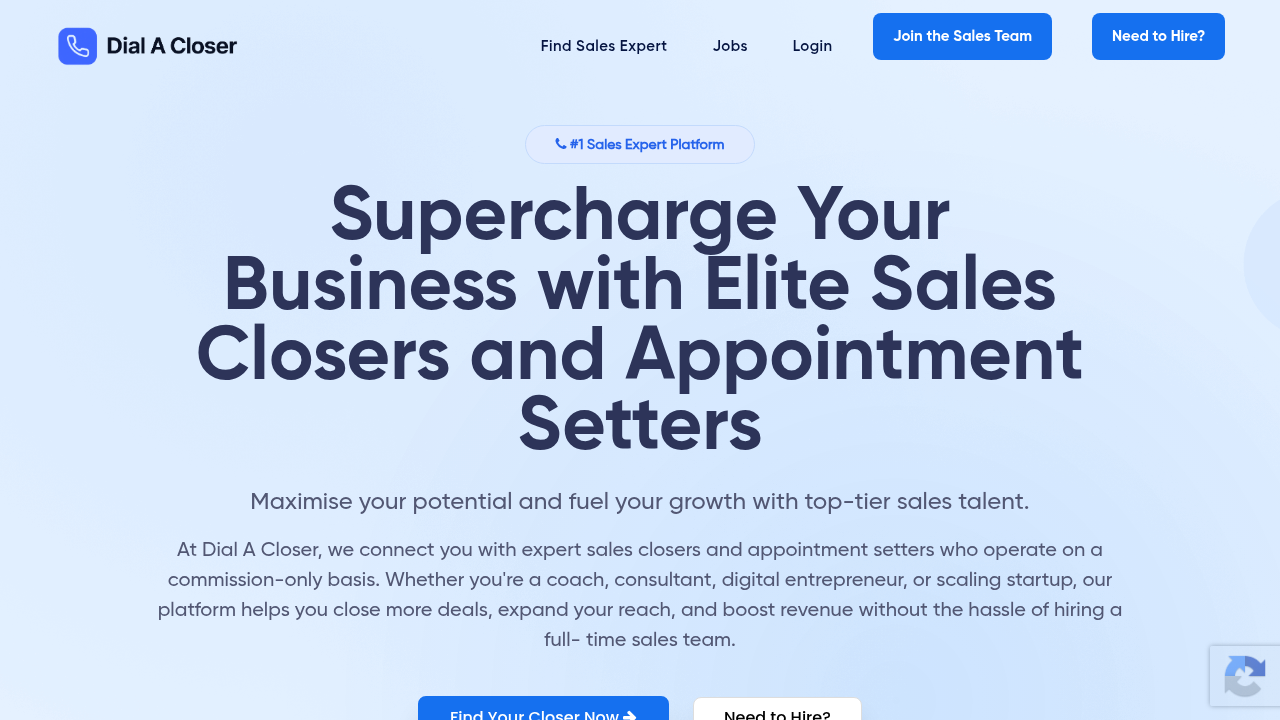
If you want a platform that understands commission structures and high-value deals, this is a strong place to start. The jobs listed here come from companies that already know what a good closer looks like. According to their breakdown of top websites for remote high ticket sales roles, this is the best overall platform for finding these specific opportunities.
2. Crossover
Crossover positions itself as an elite talent marketplace. It connects experienced sales professionals with high-paying remote roles at established companies.
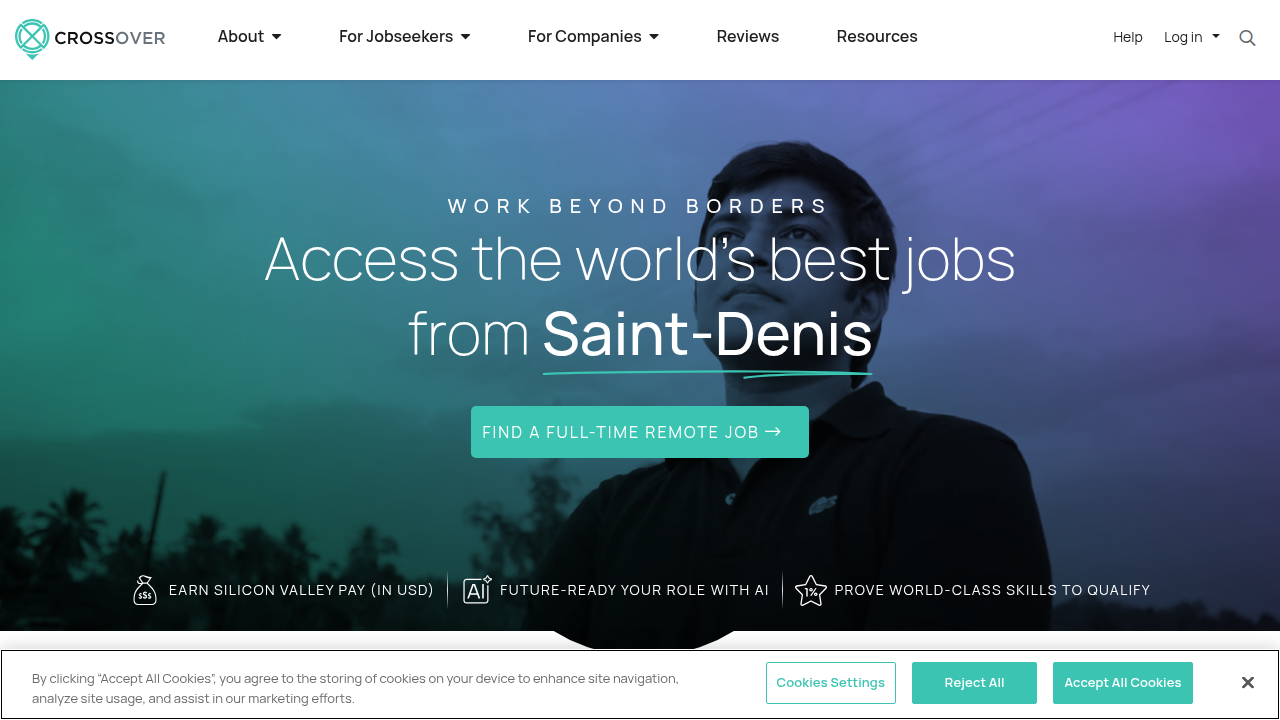
The vetting process is thorough, which means you compete against serious applicants. If you have a strong closing background, this platform can open doors to six-figure remote jobs that never show up on general boards. A 2026 analysis of the top remote work platforms lists Crossover as a top contender for serious remote professionals.
3. Dynamite Jobs
Dynamite Jobs focuses on companies that are truly ready to hire remote talent. Their listings are curated to ensure availability and legitimacy. This matters a lot when you are looking for remote jobs hiring for high-ticket sales. The platform verifies that positions are real and current. If you are tired of applying to ghost listings, this is a better option.
4. Upwork
Upwork may not be the first platform you think of for high-ticket sales, but it works well for freelance closers.
Companies post contract roles looking for experienced high-ticket closers. You can browse over 1,500 active listings in this category. The flexibility works great if you want to build a book of clients rather than commit to one full-time role. Just make sure your profile shows proven results.
5. FlexJobs
FlexJobs is a subscription-based board that screens every listing for scams and legitimacy.

For high-ticket sales roles, this screening is a huge time saver. While it casts a wider net than niche platforms, the quality control is excellent. You can filter specifically for sales and commission-based roles.
| Platform | Best For | Cost | Key Strength |
|---|---|---|---|
| Dial a Closer | High-ticket closers | Free to browse | Targeted listings |
| Crossover | Experienced professionals | Free to apply | Elite vetting |
| Dynamite Jobs | Remote-first roles | Free to browse | Verified listings |
| Upwork | Freelance closers | Free to join | Flexible contracts |
| FlexJobs | Safety-conscious searchers | Subscription | Scam screening |
Each platform serves a different need. If you are new to this space, check out our guide on what a high-ticket closer does and how to start your career. It will help you figure out which platform fits your experience level.
The best approach is to use more than one. Combine a niche platform like Dial a Closer with a general quality board like FlexJobs. That way you cover both targeted opportunities and broader options. Many successful high-ticket closers also work with sales recruiting firms to find roles that never get posted publicly.
Talk to our network about the tools and resources that can speed up your search. Get a Quote
How to Evaluate the Credibility of Remote Sales Job Listings
You have a list of promising platforms now. But here is the thing. Not every remote job listing is real. Scammers know high-ticket sales roles look attractive. They use that to trick job seekers. So how do you tell the difference between a legitimate opportunity and a waste of time? You need a simple vetting process.
Red Flags to Watch For
Some warning signs should make you stop immediately. If a listing asks for upfront fees, walk away. Legitimate companies never ask you to pay for training or application fees. Vague job descriptions are another big red flag. If the post does not explain what you will sell or who the target customer is, that is suspicious. Unrealistic commission promises also signal trouble. When a listing promises huge earnings for very little work, it is usually a scam. As one expert guide explains, offers of unusually high pay for minimal work should raise red flags, especially if they pressure you to act fast. You can see the full list of remote job scam red flags for more details.
Other signs include poor grammar in the posting, generic email addresses from free services, and employers who reach out to you even though you never applied. These are all common tactics used by scammers.
Research the Company First
Before you apply, do some digging. Start with the Better Business Bureau (BBB) website. Search for the company name and see if there are complaints or alerts. Glassdoor is another great tool. Look for reviews from current or past employees. If a company has no online presence or a very thin one, that is a warning. You can also check LinkedIn to see if real people work there and what their profiles look like.
A good step is to search the company name plus the word "scam" or "review". If you find many complaints, move on. Trust your gut. If something feels off, it probably is.
A Simple Vetting Process You Can Use Today
Here is a step by step process for every remote sales job you consider.
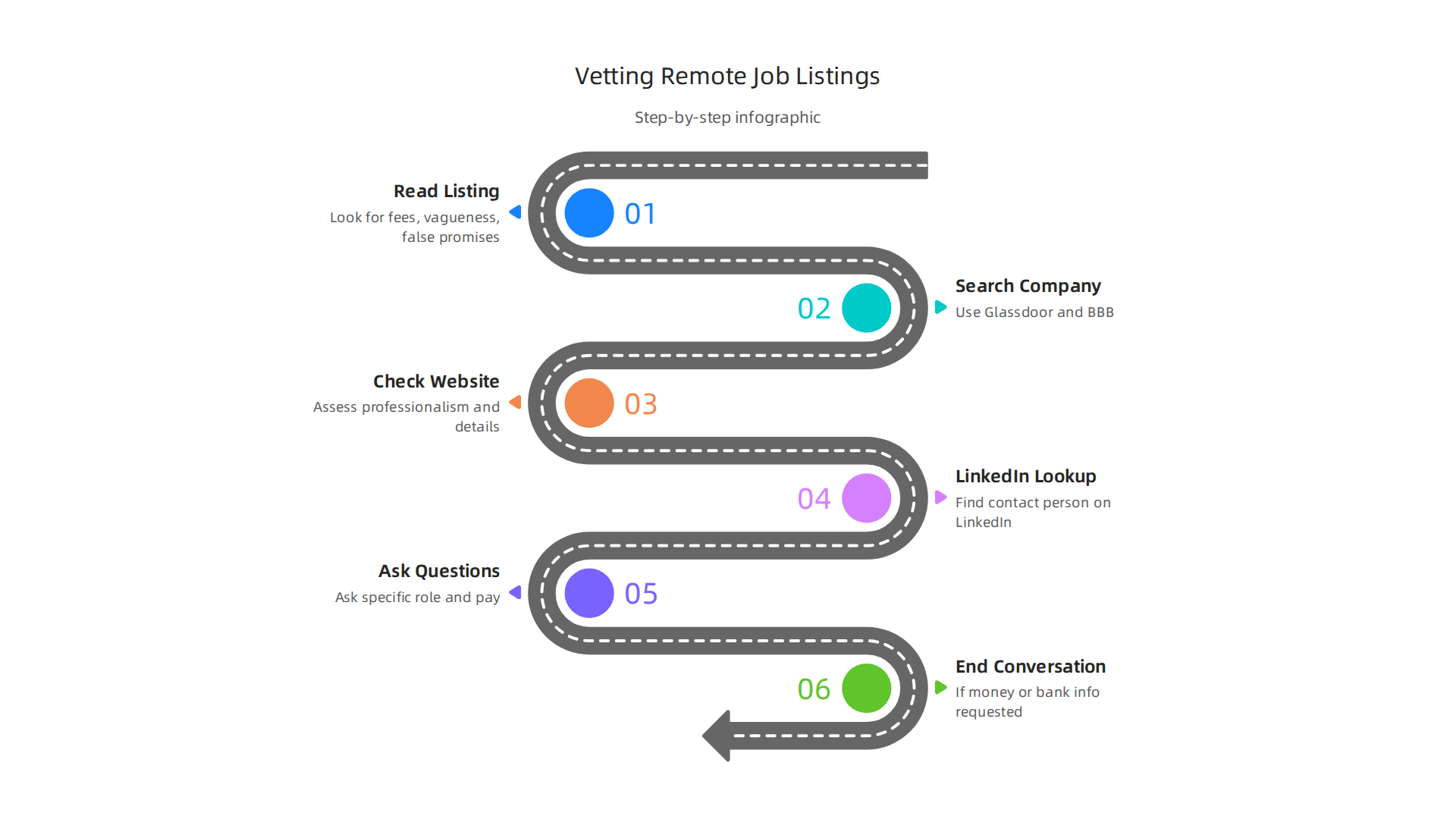
- Read the listing carefully. Look for any of the red flags above.
- Copy the company name and search it on Glassdoor and BBB.
- Check the company’s website. Does it look professional? Is there a real address and phone number?
- Look up the person who contacted you or posted the job on LinkedIn.
- Ask specific questions in the interview. "What is the product? Who is the ideal client? How is commission structured?" Legitimate companies answer clearly. Scammers avoid specifics.
- If they ask for money or personal financial information, end the conversation.
Using this process will save you from wasting time on fake listings. It also helps you focus your energy on real opportunities from reputable companies. If you are new to high-ticket sales, you can learn more about what a high-ticket closer does to better understand what legitimate roles look like.
The best remote job finder platforms do some of this screening for you. But nothing replaces your own research. Stay sharp and trust the steps above. For more tips on building a successful career in high-ticket sales, check out our related articles and resources.
Niche vs. General Job Boards: Which Remote Job Finder Is Right for You?
By now you know how to spot fake listings. So where should you actually look for real high-ticket sales roles? The answer is not just one place. You need a mix of general and niche job boards. Each type has its own strengths. Let us break them down so you can pick the best remote job finder for your needs.
General Job Boards: Volume but Less Focus
General boards like LinkedIn, Indeed, and Glassdoor have thousands of listings. That is great for volume. You can find remote jobs hiring across many industries. But here is the catch. Most of those listings are for low-ticket or inside sales roles. Finding a true high-ticket closer position takes more effort. You have to dig through lots of noise.
The upside is that these boards have built-in filters. You can search by salary, experience level, and remote status. According to a 2026 comparison of top job boards, platforms like LinkedIn and Indeed remain the most popular because of their massive reach. However, they lack the targeted filters that high-ticket sales professionals need. You might see a job titled “Remote Sales Rep” that actually pays $40,000 base. That is not high-ticket territory.
Another challenge is that general boards attract more scammers. Because anyone can post, you see more fake or low-quality listings. That is why your vetting process from the previous section is so important.
Niche Job Boards: Quality over Quantity
Niche boards focus on specific industries or job types. For high-ticket sales, you have boards like SalesJobs.com, RemoteSalesJobs.com, and others that cater to sales professionals. These platforms often feature listings from companies that specialize in high-value deals. The roles are more likely to involve six-figure commissions and real remote opportunity.
A 2026 review of niche job boards shows that these sites deliver higher candidate quality. Employers who post there are serious about finding experienced closers. Listings are often curated, meaning less spam. The trade off is fewer openings. You might see 20 new jobs per week instead of 200. That is okay because each one is more likely to be a good fit.
Niche boards also connect you with sales recruiting firms and sales staffing agencies that specialize in high-ticket roles. These agencies often pre-screen candidates and match you directly with hiring managers.
The Best Strategy: Use Both Together
Here is the smart approach. Use general boards for volume and niche boards for quality. Set up saved searches and alerts on both. On LinkedIn, save a search for “high-ticket closer” or “remote sales executive” with a minimum salary filter. On a niche board, save the same terms. Check each daily.
When you find a promising listing on a general board, cross-reference it with your vetting steps. For niche boards, you can trust the curation a bit more, but still do your own research.
The key is to cast a wide net while staying targeted. Do not spend all your time on one type. If you want to learn more about the specific skills these roles require, read our guide on what a high-ticket closer does to see if the job descriptions match your goals.
Then, as you apply and interview, keep refining your approach. For more strategies to accelerate your high-ticket sales career, browse our articles for additional insights on training, tools, and proven methods.
Essential Features to Look for in a Remote Job Finder Tool
Now that you know where to look for high-ticket sales roles, you need to make sure your remote job finder actually helps you find the right ones. Not every job board or platform is built the same. The best tools share a few key features that save you time and keep you organized. Here is what to look for.
Advanced Filters: Go Beyond Job Titles
A basic search box is not enough. You need filters that let you zero in on high-ticket opportunities. Look for platforms that let you filter by:
- Commission vs. salary – so you can see base pay plus commission potential.
- Remote level – fully remote, hybrid, or location independent.
- Industry – tech, finance, healthcare, or SaaS.
- Deal size – average contract value or average commission per sale.
According to a 2026 review of remote job tools, platforms like FlexJobs and Crossover offer advanced filtering that helps serious closers skip the low-paying posts. That means less time scrolling and more time applying to roles that match your income goals. For example, if you only want roles with a $100,000+ OTE, the best tools let you set that as a hard filter.
Instant Alert Systems: Never Miss a Good Role
High-ticket sales jobs get snapped up fast. You need alerts that notify you the minute a new listing goes live. Some platforms send alerts once a day, which is too slow. Look for tools with real-time or instant push notifications. The best remote jobs hiring platforms let you set alerts by keyword and salary range. That way, when a “Remote High-Ticket Closer” role pops up, you are the first to apply.
Integration with Job Tracking Tools
When you apply to multiple roles, it is easy to lose track. A good remote job finder should let you export your applications or sync with a CRM. Some platforms offer internal application trackers. If not, you can pair them with a simple spreadsheet. But the best experience comes from tools that connect directly with job tracking apps. This helps you manage follow-ups and stay organized as you work with sales recruiting firms and sales staffing agencies.
If you want a deeper look at how to build a complete high-ticket sales career from scratch, check out our guide on how to start a high-ticket sales career in 2026. It covers everything from training to landing your first client.
For more tips on tools and strategies that boost your closing performance, read our articles for expert advice and actionable steps.
Building a System: How to Use Remote Job Finders in an Organized Job Search
Having a great remote job finder is only half the battle. The other half is how you use it. Without a system, you end up applying randomly and losing track of where you are. In 2026, the professionals who land the best high-ticket roles are the ones who treat their job search like a sales pipeline.
Here is how to build a simple system that keeps you organized and ahead of the competition.
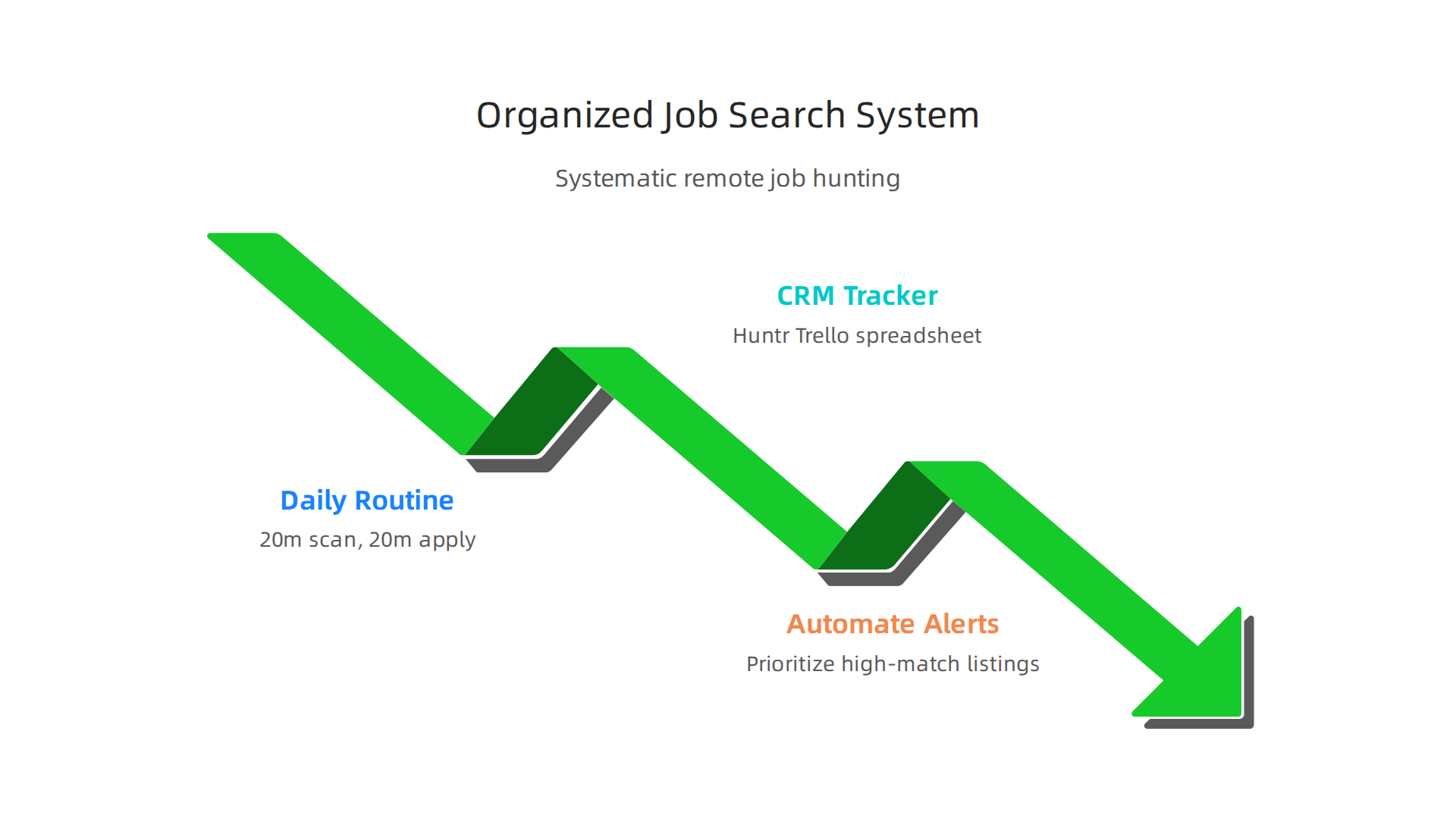
Set a Daily Routine for Scanning and Applying
Pick two or three platforms and check them at the same time every day. Do not open every job board at once. That leads to burnout. Instead, spend 20 minutes in the morning scanning new listings on your main remote jobs hiring platforms. Use your filters to ignore roles that do not match your income goals. Then spend another 20 minutes applying to the best matches.
If you see a role that fits perfectly, apply the same day. Sales recruiting firms and sales staffing agencies often get hundreds of applications within hours. Speed matters.
Use a CRM-Style Tracker for Your Applications
You would never close a sales deal without tracking your leads. Your job search should be no different. Use a tool like Huntr, Trello, or a simple spreadsheet to manage every application. Keep track of the company name, the role, the date you applied, and the next follow-up step.
According to a hands-on test of seven job application trackers in 2026, tools like Huntr and Prentus make it easy to see your entire job search at a glance. That means you never miss a follow-up or let a warm lead go cold. Some platforms even let you drag and drop applications between stages, just like a sales CRM.
Pro tip: If you want to go deeper into building a profitable sales career, read our guide on master high-ticket sales training to build core skills and maximize commissions. It covers the exact skills that help you close more deals once you land the role.
Automate Alerts and Prioritize High-Match Listings
Set up instant alerts for your ideal job criteria. When a listing matches your exact salary range and remote preference, apply first. Do not wait. High-ticket roles at top sales staffing agencies can fill in a day.
Spend 10 minutes each week reviewing your tracker. Which applications have not gotten a response? Which roles are still open? Prioritize the ones with the highest match to your skills and income needs. This keeps your pipeline moving instead of getting stuck.
Ready to Take the Next Step?
Building a system takes a little setup, but it saves you hours every week. If you want more strategies to sharpen your search and close more deals, view our articles for expert advice that helps you move faster.
Common Mistakes to Avoid When Using Remote Job Finders
Even the best remote job finder can let you down if you make these common mistakes. In 2026, the difference between landing a high-ticket role and getting stuck often comes down to what you avoid doing. Here are the three biggest traps and how to sidestep them.
Mistake 1: Relying on Only One Platform
It is easy to get comfortable with one job board and forget the rest. But top sales recruiting firms and sales staffing agencies often post on different sites. If you only check one platform, you miss out on premium opportunities.
Spread your net across two or three remote jobs hiring platforms. Use the system from the previous section to scan them daily. The more places you look, the better your odds of finding a role that matches your income goals.
Mistake 2: Skipping Due Diligence on Company Culture and Commissions
A high salary on paper means nothing if the company culture is toxic or the commission structure is unfair. Some companies promise big numbers but make it almost impossible to hit quota. Before you apply, research the company. Look for reviews from current and former employees. Ask about commission caps and payment timelines during the interview.
If you want to know what to look for in a good agency, check out our guide on how to choose a direct sales agency for high-ticket sales. It covers red flags and green lights you need to spot.
Mistake 3: Sending the Same Application to Every Role
Nothing screams "I did not try" louder than a generic resume and cover letter. In high-ticket sales, hiring managers look for candidates who understand the specific product and market. A one-size-fits-all approach tells them you are not serious.
Take ten extra minutes to tailor each application. Highlight your relevant sales wins and match your language to the job description. According to a guide on acing high-ticket sales interviews, preparation and personalization are what set top candidates apart High Ticket Sales Academy. Do the same for your written materials.
Ready to Fix Your Approach?
Avoiding these mistakes puts you ahead of most applicants. If you want more strategies to sharpen your search and land the right role, browse our articles for expert advice that helps you move faster.
Expert Tips from Hiring Managers: Standing Out in a Remote High-Ticket Sales Search
So you know what to avoid. That puts you ahead of most people. But if you want to really stand out, you need to do what actual hiring managers look for. Here is what they told us works best in 2026.
Tip 1: Show You Used the Right Job Finders
Hiring managers can tell when you found their listing on a generic board. They prefer candidates who found the role through a specialized remote job finder. It shows you are serious about this specific path. When you apply, mention that you saw the job on a platform focused on remote jobs hiring. This small detail signals that you did your homework. It also tells them you are likely part of a community that cares about high-ticket sales.
Tip 2: Follow Up Like a Pro Salesperson
In high-ticket sales, prospecting is everything. If you cannot follow up on your own job application, how will you follow up with leads?

After you submit your application, send a short, polite email to the hiring manager or recruiter. Say thank you and restate your interest. This small move proves you understand the sales process. According to a 2026 guide on acing high-ticket sales interviews, demonstrating enthusiasm and confidence can leave a lasting impression Innovative Ventures. Use that same energy in your follow-up.
Tip 3: Lead with Your Closer Experience
Your resume and profile should not just list your past jobs. They should show that you can close deals. If you have direct high-ticket closing experience, lead with that. If you are switching from another field, highlight transferable skills like negotiation, persistence, and relationship building. Make it easy for the hiring manager to see you as a closer. For more on how to build these skills from the ground up, check out our guide on master high-ticket sales training.
Ready to Take the Next Step?
These tips give you an edge over other applicants. If you want more strategies to sharpen your search and land the right role, Read More strategies from our blog to keep moving forward.
Summary
This guide explains how remote sales professionals—especially high-ticket closers—can stop wasting time on generic job sites and use smarter remote job finder strategies to land legitimate, high-paying roles. It outlines why niche platforms and vetted boards outperform large aggregators, profiles the top five platforms for 2026, and explains how sales recruiting firms and staffing agencies fit into the search. You’ll get a clear vetting checklist to spot scams, practical guidance on combining niche and general boards, and the exact features to demand from any job finder tool (advanced filters, instant alerts, and application tracking). The article also shows how to run your search like a sales pipeline—daily routines, CRM-style trackers, and follow-up best practices—and highlights common mistakes that cost applicants their edge. Finally, hiring manager insights reveal small tactics that make you stand out in applications and interviews. After reading, you’ll be able to target the right platforms, vet listings quickly, organize your pipeline, and apply with a higher chance of landing real high-ticket remote roles.